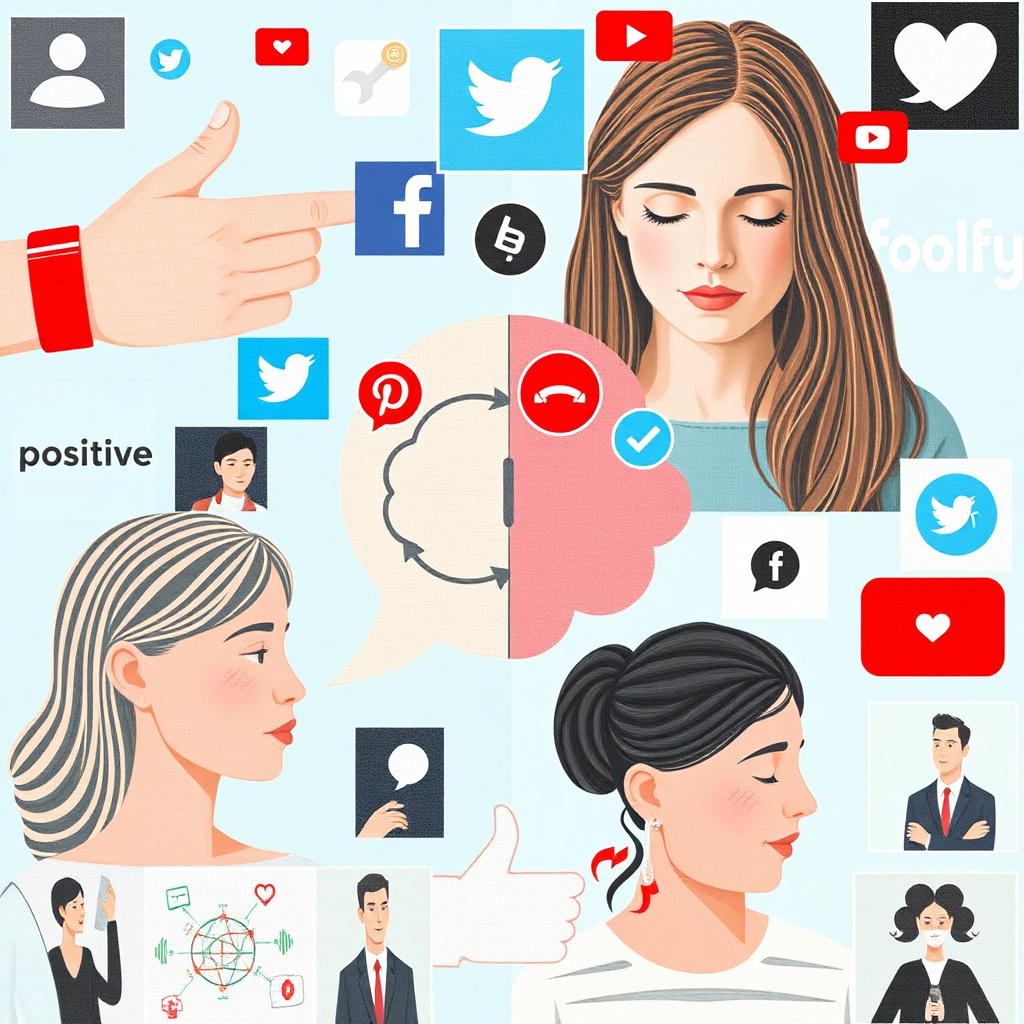
The Impact of Social Media on Modern Society: A Comprehensive Overview
Introduction to Social Media’s Role in Today’s World
Social media platforms like Facebook, Instagram, and Twitter have become an integral part of daily life, transforming how billions connect and communicate. These digital communication channels enable instant sharing of information, ideas, and experiences across the globe, making social media ubiquitous in modern society.
From personal interactions to broader cultural movements, social media influences nearly every aspect of contemporary social dynamics. Its pervasive presence has introduced new ways to build online communities, disseminate information, and express identity, shaping digital culture trends profoundly.
Positive Effects of Social Media on Society
Social media fosters connectivity, enabling people worldwide to stay in touch, share knowledge, and collaborate across boundaries. Platforms facilitate rapid information dissemination, allowing users to discover news, educational content, and diverse perspectives more easily than ever before.
Importantly, social media also empowers social activism and digital movements by providing tools for organizing, raising awareness, and amplifying marginalized voices. Campaigns such as #BlackLivesMatter and climate advocacy have gained momentum through widespread social media engagement.
Additionally, these platforms cultivate new cultural expressions and online subcultures, encouraging creativity and the formation of niche communities. For example, Instagram has popularized visual storytelling, while Twitter promotes succinct, real-time public conversations.
Key positive impacts include:
- Enhanced global connection and networking opportunities
- Access to diverse information and educational resources
- Support for social activism and civic engagement
- Development of inclusive online communities and cultural identities
Negative Consequences of Social Media Use
Despite many benefits, social media use carries significant drawbacks. The rapid spread of misinformation and fake news undermines trust in credible information and polarizes public opinion. This distortion can affect elections, public health, and social cohesion.
Mental health and wellbeing concerns are increasingly linked to excessive social media use. Issues such as anxiety, depression, and reduced self-esteem often arise from social comparison, cyberbullying, and addiction to digital validation.
Privacy and data concerns also complicate social media’s impact. Vast amounts of personal data are collected and exploited for targeted advertising, raising ethical questions about consent and surveillance.
Challenges posed by social media include:
- Proliferation of misinformation and manipulation
- Negative effects on mental health and psychological wellbeing
- Privacy vulnerabilities and data security risks
- Potential erosion of face-to-face social skills
Social Media and Changing Communication Patterns
Social media has transformed how individuals communicate, shifting interactions from traditional face-to-face or phone conversations to digital dialogues across networks. This has expanded social reach but often reduced depth and face-to-face nuance.
Instant messaging and commenting features have normalized rapid, brief exchanges, impacting interpersonal relationship dynamics. Public and semi-public conversations on platforms like Twitter have also blurred lines between private and public communication.
This shift influences norms around attention, responsiveness, and conflict resolution. While social media facilitates connection at scale, it may also encourage superficial engagement and misunderstandings due to the lack of nonverbal cues.
Communication changes include:
- Acceleration of discourse with shorter, more frequent interactions
- Blurring of private and public boundaries in communication
- Greater reliance on digital cues instead of face-to-face signals
- New etiquette norms and conversational formats (threads, stories, memes)
Influence on Identity, Culture, and Community
Social media plays a crucial role in shaping cultural identity and community formation by providing spaces where people curate and express multifaceted online personas. Users craft digital identities influenced by social feedback, trends, and cultural narratives.
Online communities form around shared interests, values, or identities, transcending geographic limitations. These digital subcultures contribute to a complex cultural mosaic but can also reinforce echo chambers.
Furthermore, social media accelerates cultural shifts by circulating new norms, language, and aesthetics rapidly. It encourages participatory culture where users actively create and remix content, redefining traditional cultural gatekeeping.
Key cultural impacts include:
- Digitally mediated identity creation and performance
- Formation of virtual communities and subcultures
- Rapid diffusion and evolution of cultural trends
- Potential for both inclusion and fragmentation in social groups
The Future of Social Media in Society
The future of social media will likely feature increased integration of emerging technologies such as artificial intelligence, augmented reality, and decentralized platforms. These advances promise more immersive experiences but also raise questions about control and ethical use.
Societal impacts will continue to evolve, balancing opportunities for deeper connection and empowerment against risks like misinformation, mental health issues, and privacy erosion. Regulatory frameworks and platform design changes may address some concerns, but user behavior adaptation remains critical.
Ultimately, social media’s role in modern society will be shaped by ongoing negotiation between technology capabilities, cultural values, and individual agency.
FAQ
What are the main benefits of social media for society?
Social media enables global connectivity, faster information sharing, support for activism, and new ways to build communities and cultural identities.
How does social media affect mental health?
While social media can offer social support and connection, excessive use is linked to anxiety, depression, and low self-esteem often due to social comparison and cyberbullying.
Can social media drive social change?
Yes, social media platforms facilitate awareness, mobilization, and collective action, as seen in movements like #MeToo and environmental campaigns.
What privacy risks are associated with social media?
Social media often collects vast personal data, risking misuse, surveillance, and breaches that undermine user privacy and security.
How does social media influence cultural identity?
Social media allows users to craft and express identities online, shaping cultural norms and enabling formation of diverse digital communities.